Specifications
Standardized Material Identification
▸Contents: 31 - Collision Information
Position Statements
- Authentic Mopar® Glass Replacement
- Reconditioned Wheel Usage
- Replacement Seat Covers And Seat Cover Repairs
- Salvaged Air Bags Or Other Salvaged Restraint System Component Usage
- SCAN TOOL SUPPORT BEFORE and AFTER COLLISION REPAIR
- Steering System
- Repair Parts Used For Structural Repairs
- Use Of Aftermarket Parts
- Use Of Heat While Repairing Damaged Structural And Non-Structural Components
- Use Of Optional Oe Parts
- Bumper/Fascia Repair With Adas
- One-Time-Use Parts & Fasteners
Standard Procedure
- Service After A Supplemental Restraint System Deployment
- Handling Non-Deployed Supplemental Restraints
- Post Collision Seat Belt Inspection
- Post Collision Scan Tool Inspection
- Recalibration Of Sensors And Modules
- Basecoat/Clearcoat Finish
- Finesse Sanding, Buffing, And Polishing
- Paint Touch-Up
- Rivet Nut Procedure
- Roof Panel Weld Stud
- Non-Structural Sheet Metal Repair
- Welding And Weld Bonding
- Sectioning Locations And Procedures
- Hoisting And Jacking
- Stationary Glass
- Corrosion Protection
Approved Materials
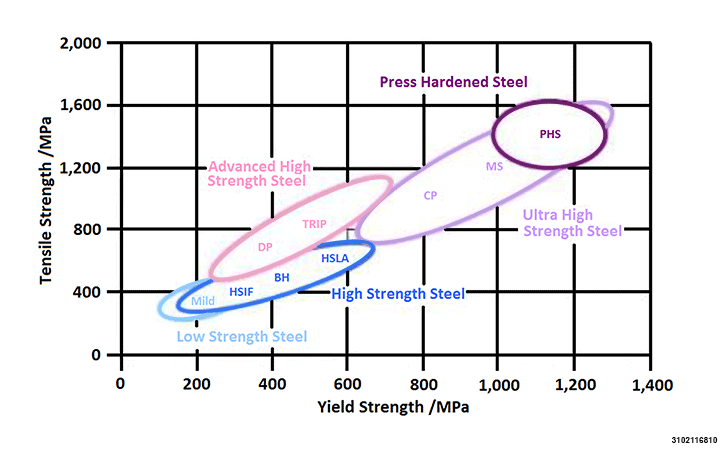
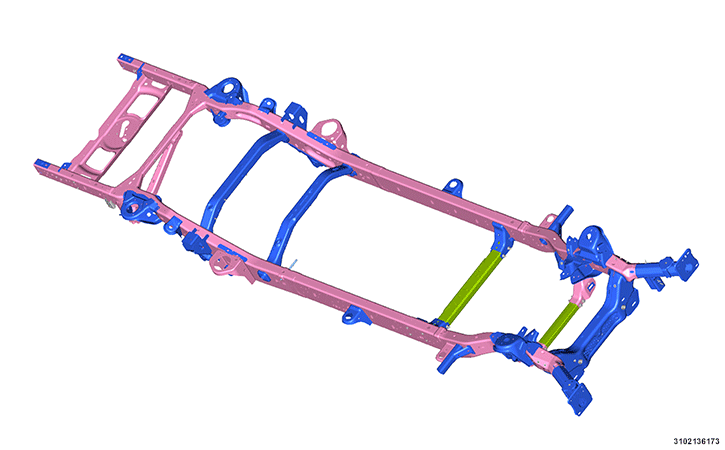
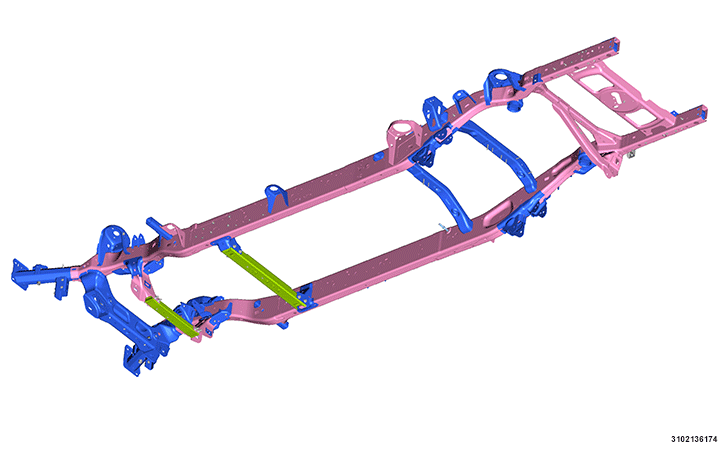
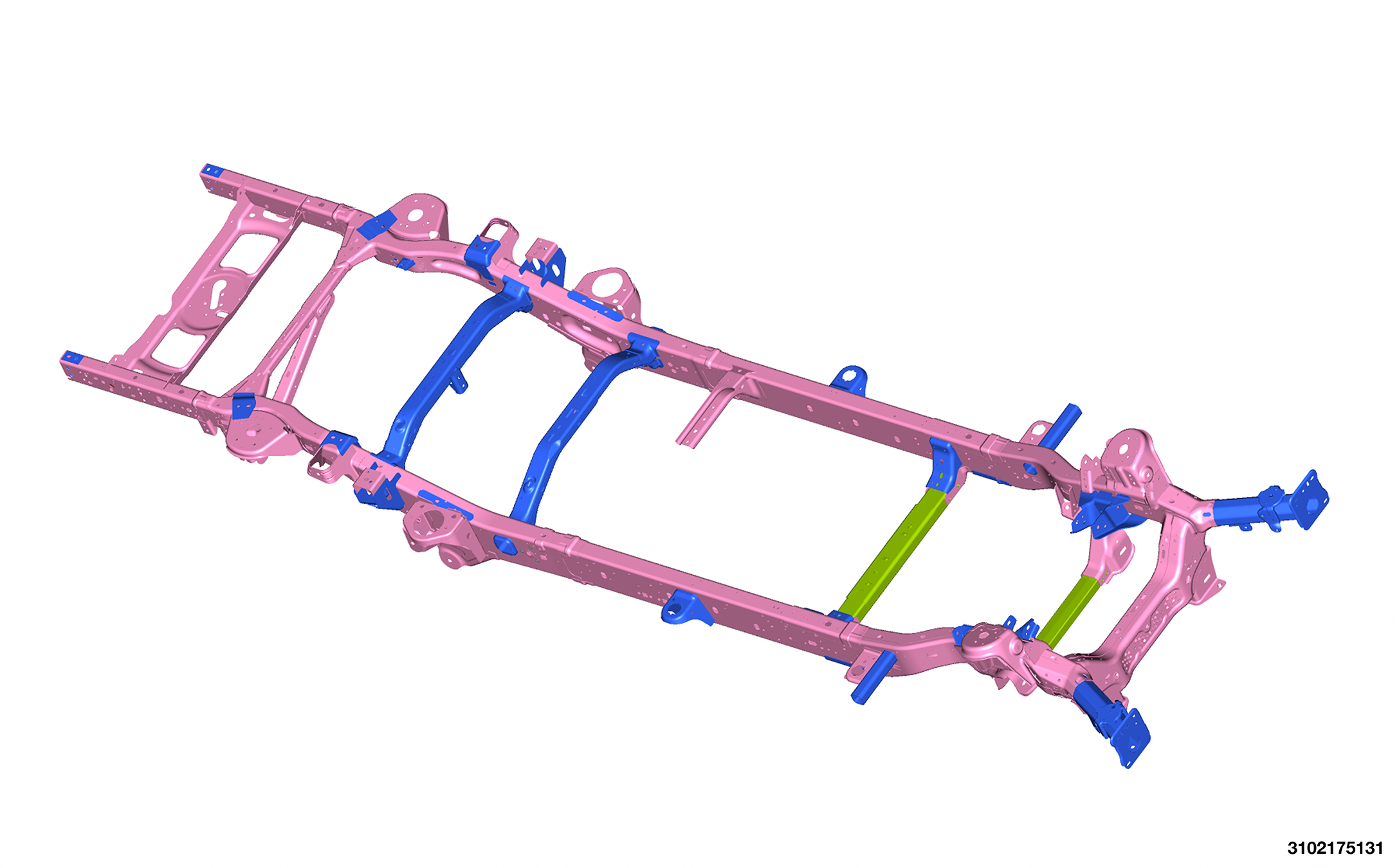
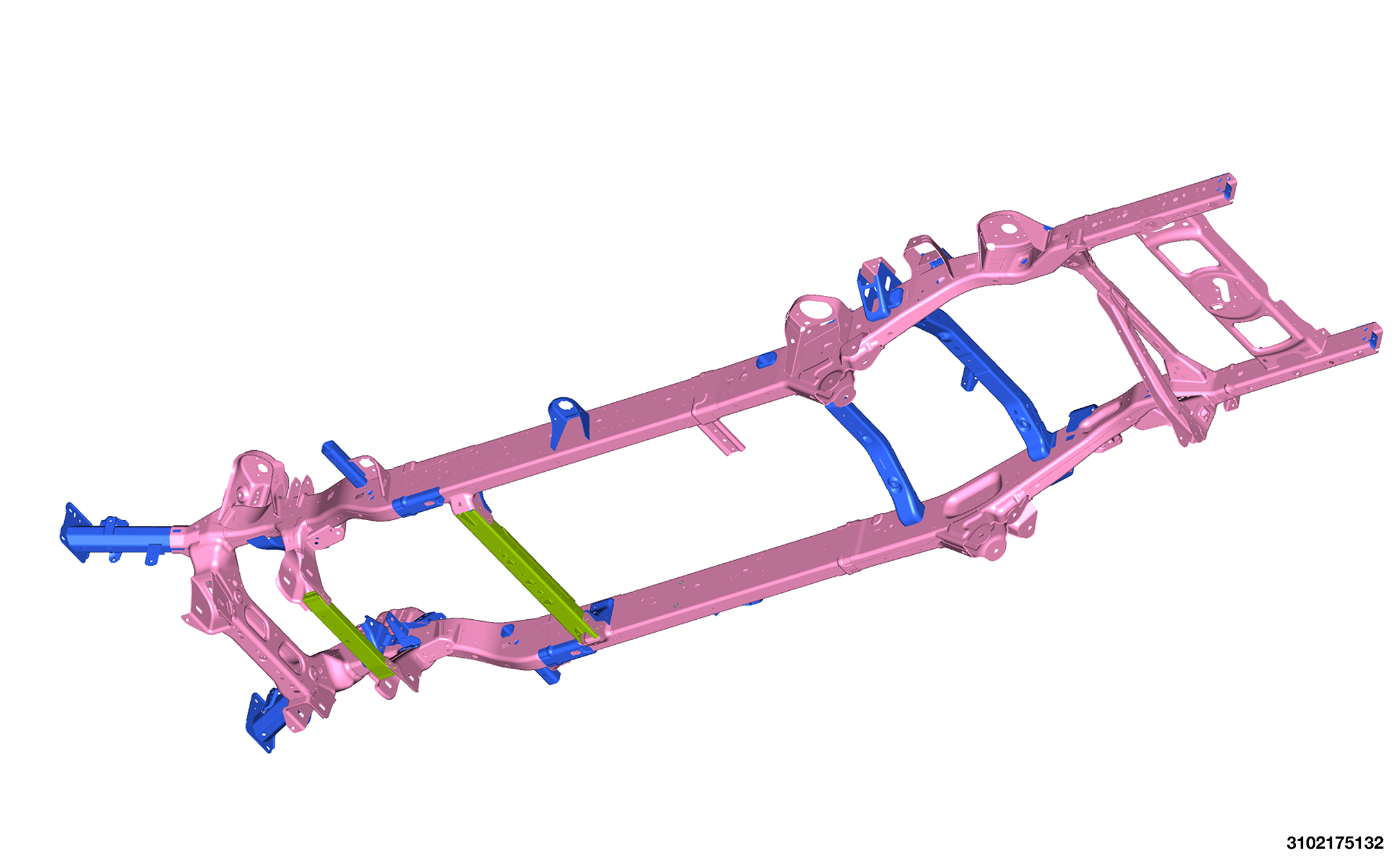
In an effort to reduce confusion over the large number of steel grades in use, and the repairability and weldability concerns involved with each, FCA US LLC has instituted new nomenclature which is applicable to material call-outs and Body In White (BIW) views released for use in the repair industry.
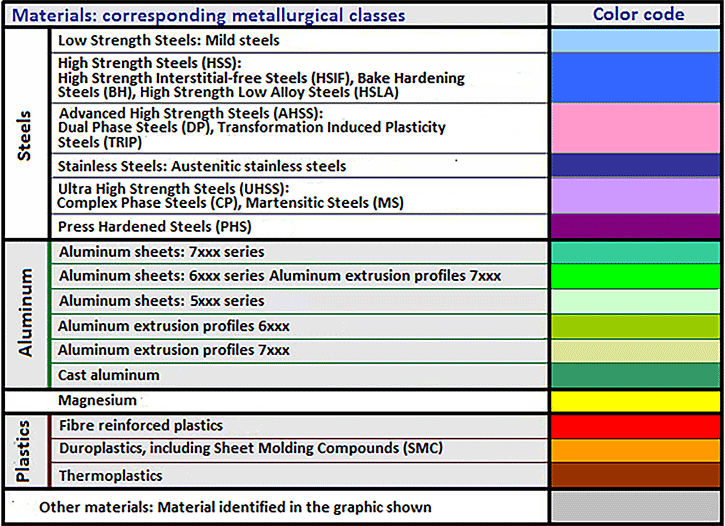
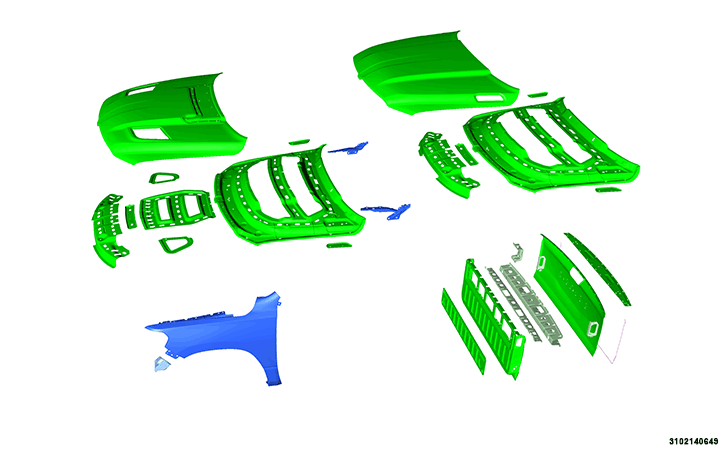
All materials listed in the key may not be used on a given model, nor may every panel be identified in the blow-up (ex: some groups do not show fascias).
USE OF HEAT DURING REPAIR- Be certain to follow guidance and instructions as found in the Use of Heat During Repair Position Statement. (Refer to 31 - Collision Information/Position Statements/USE OF HEAT DURING REPAIR) .
| WARNING: |
Failure to follow these instructions may result in possible serious or fatal injury. |
Information on sectioning of components will be identified in Non-Structural Sheet Metal Repair, Sectioning Locations and Procedures and Welding and Weld Bonding (Refer to 31 - Collision Information/Standard Procedures) .
| NOTE: |
Corrosion protection must be restored after repair. |
 |
Steels
- Low Strength Steels (LS) - Include Mild Steels. Good repairability and weldability (least sensitive to heat). May be attached using the preferred Squeeze Type Resistance Spot Welding (STRSW) process, weld bonding where appropriate, or MIG welding.
- High Strength Steels (HSS) - Includes High Strength Interstitial-Free (HSIF), Baked Hardened (BH) and High Strength Low Allow (HSLA) steels. Some repairability and good weldability (the higher the strength of the steel, the greater the sensitivity to heat). May be attached using STRSW, weld bonding, and MIG welding unless otherwise noted in Sectioning Locations and Procedures (Refer to 31 - Collision Information/Standard Procedures/SECTIONING LOCATIONS AND PROCEDURES) .
- Advanced High Strength Steels (AHSS) - Includes Dual Phase (DP) and Transformation Induced Plasticity (TRIP) steels. Very limited repairability and weldability (very sensitive to heat). Attach only at OE defined locations. Specialized cutters are required with many materials in this group. May be attached using STRSW, weld bonding and Metal Inert Gas (MIG) brazing, to minimize heat affected zone, unless otherwise noted in Sectioning Locations and Procedures (Refer to 31 - Collision Information/Standard Procedures/SECTIONING LOCATIONS AND PROCEDURES) .
- Ultra High Strength Steels (UHSS) - Includes Complex Phase (CP) and Martinistic Steels (MS). Very limited repairability and weldability (very sensitive to heat). Attach only at OE defined locations using OE defined procedures. Specialized cutters are required with many materials in this group. May be attached using STRSW, weld bonding and Metal Inert Gas (MIG) brazing to minimize heat affected zone.
- Press Hardened Steels (PHS) - Includes hot-stamped boron materials which are also termed “press hardened”. No repairability and limited weldability (very sensitive to heat). Attach only at OE defined locations. Specialized cutters are required with many materials in this group. May be attached using STRSW, weld bonding and Metal Inert Gas (MIG) brazing to minimize heat affected zone.
Magnesium
- Magnesium No repairability, replacement of components only. Special care must be used when working around magnesium parts due to combustibility.
Aluminum
- Aluminum Sheets - Including 5000, 6000 and 7000 series aluminum sheets. Stamped aluminum sheet metal panels may be repairable with specialized tools and techniques.
- Aluminum Extrusion Profiles - Also known as extruded aluminum. Extruded aluminum sheet may be repairable with specialized tools and techniques but never when used in structural usage such as impact bars, engine cradles, suspension components.
- Cast Aluminum - Cast Aluminum is non-repairable and must be replaced.
Plastics
- Fiber Reinforced Plastics - Composite materials may be fiber reinforced (example Kevlar) or co-molded assemblies of steel and plastic. Any of these require specialized repair materials and processes.
- Duroplastics - Including Sheet Molded Compound (SMC). Some repairability depending upon the type of plastic involved, the degree of damage, and the component function. Cosmetic components such as fascias have a higher degree of repair allowed than those components which can carry components and loads. Where SMC components are bonded to steel structure, FCA US LLC will identify the proper adhesive to attach the replacement panel. Repair materials for duroplastics are commonly available in the collision repair market.
- Thermoplastics - Some repairability depending upon the type of plastic involved, the degree of damage, and the component function. Cosmetic components such as fascias have a higher degree of repair allowed than those components which can carry components and loads. Repair materials for thermoplastics are commonly available in the collision repair market.
 |
Hoods, Fender and Standard Tailgate
 |
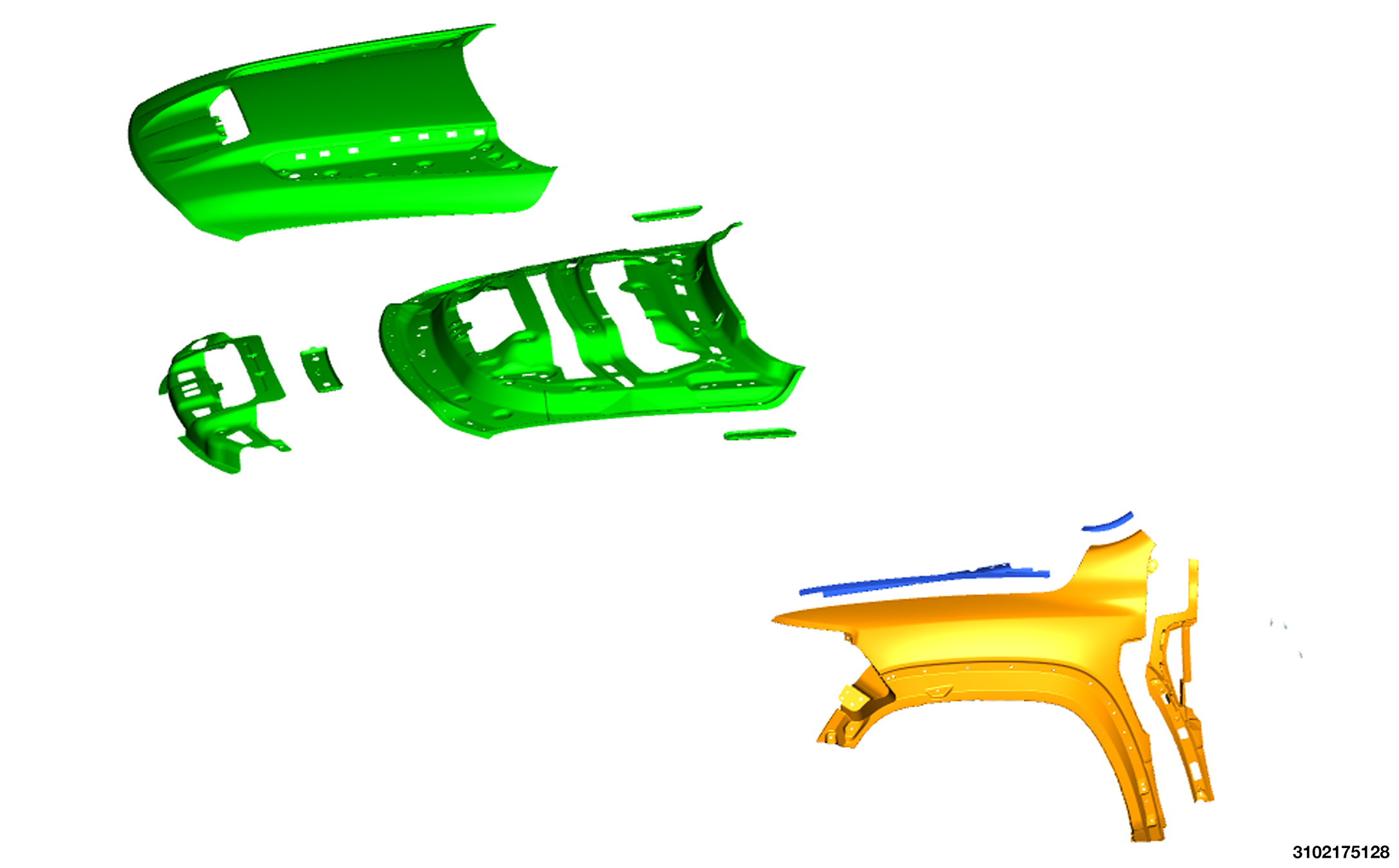
Hood and Fender- TRX Model
 |
Multi-Function Tailgate
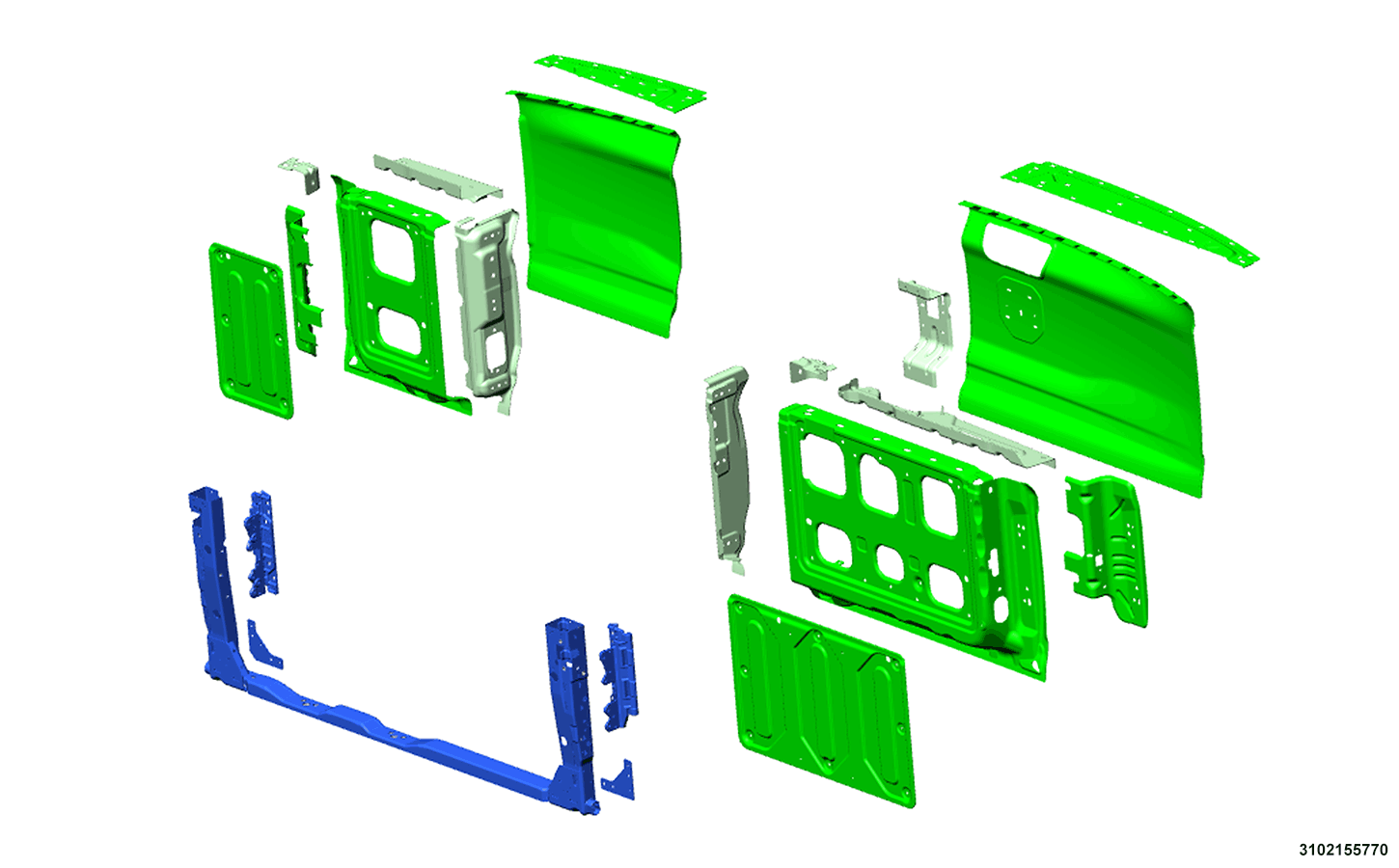 |
Front and Rear Doors
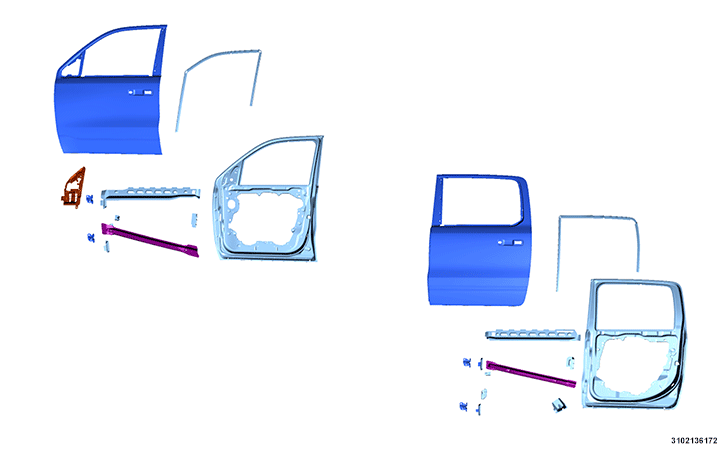 |
| NOTE: |
Crew cab doors shown. Quad cab doors similar. |
Crew Cab- Body Side Aperture, Roof Panels and Cab Back Panel
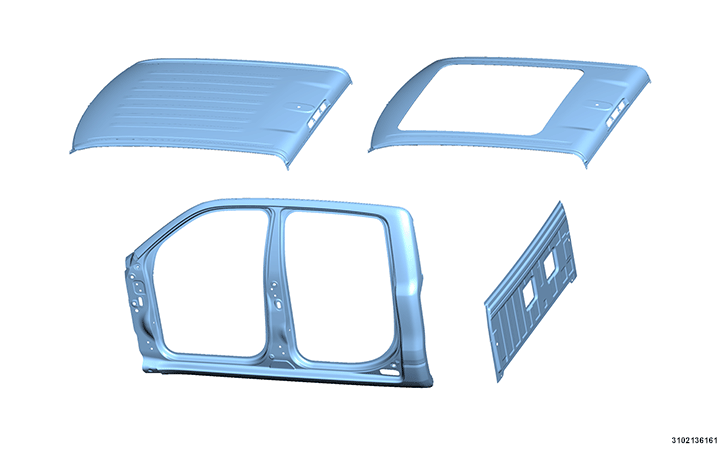 |
Crew Cab- Body In White (Top view front)
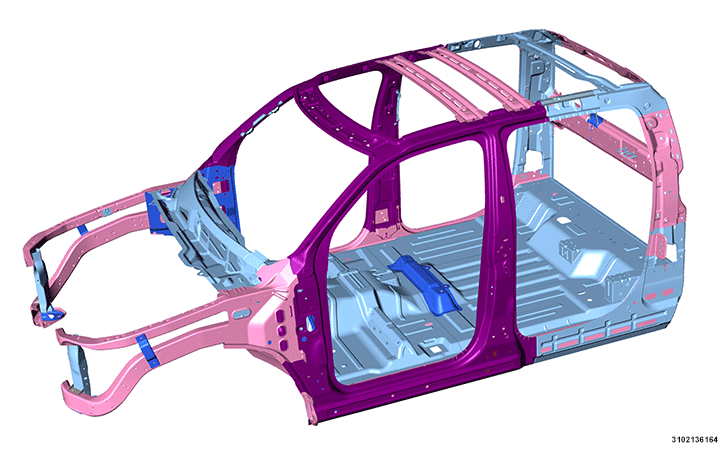 |
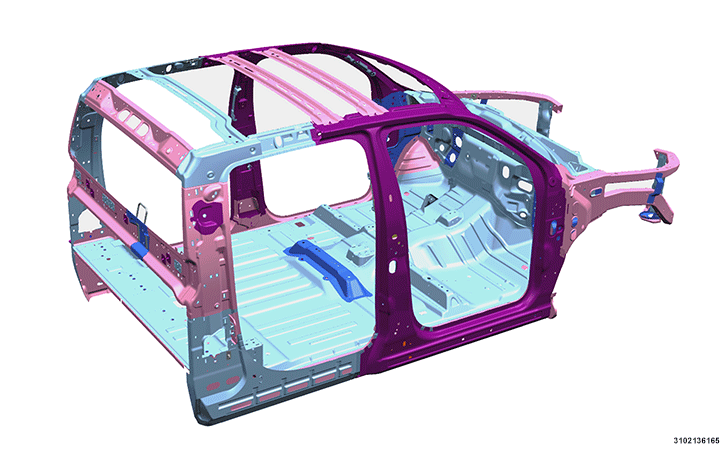
Crew Cab- Body In White (Top view rear)
 |
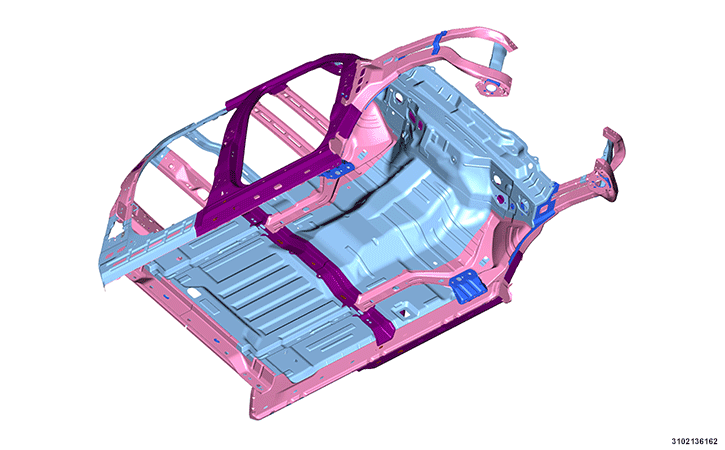
Crew Cab- Body In White (Bottom view front)
 |
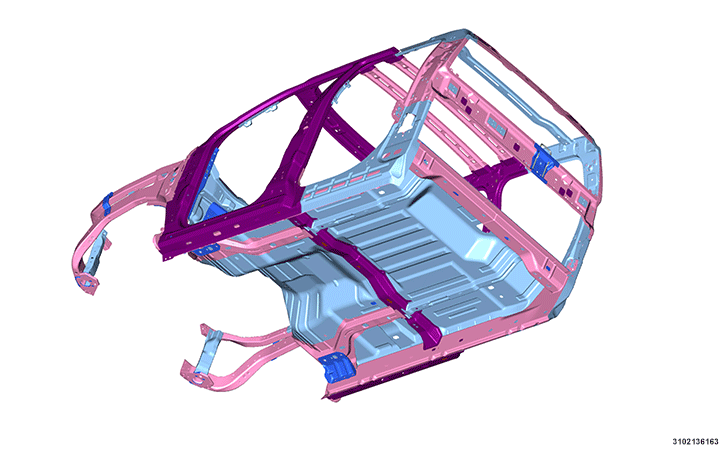
Crew Cab- Body In White (Bottom view rear)
 |
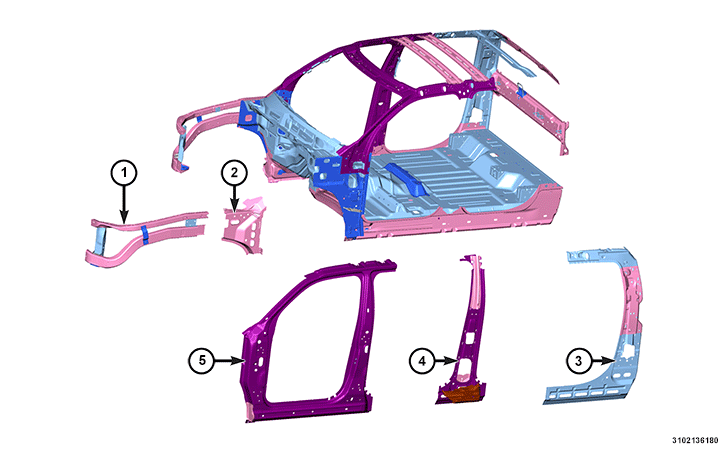
Crew Cab- Body In White (Left side view)
 |
|||||
|
|||||
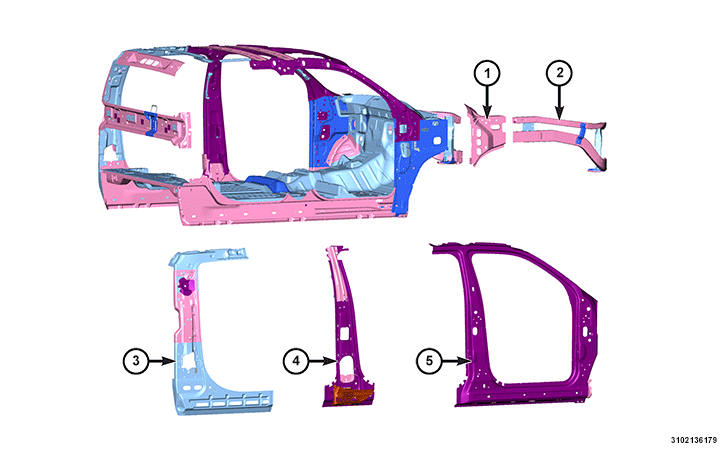
Crew Cab- Body In White (Right side view)
 |
|||||
|
|||||
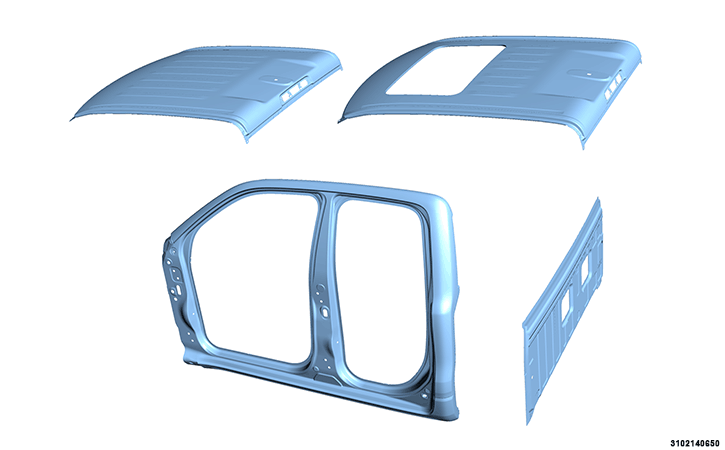
Quad Cab- Body Side Aperture, Roof Panels and Cab Back Panel
 |
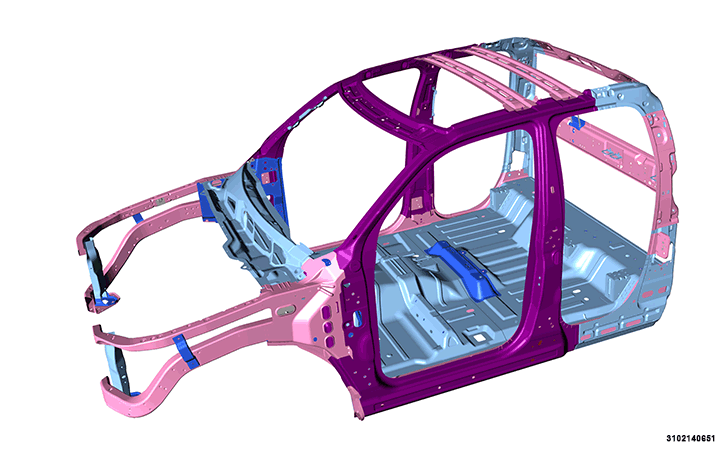
Quad Cab- Body In White (Top view front)
 |
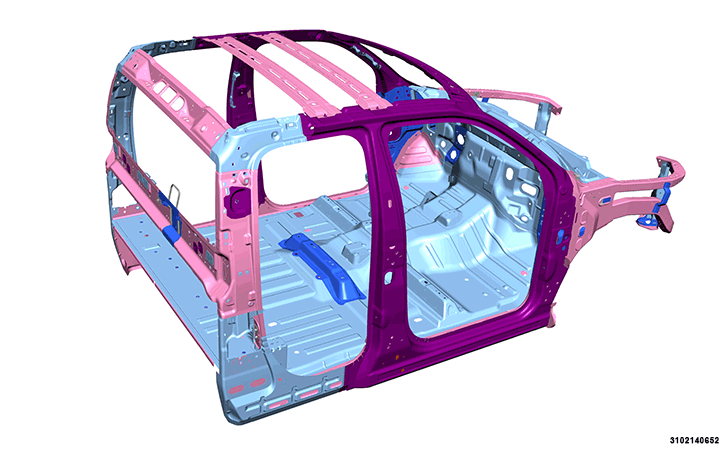
Quad Cab- Body In White (Top view rear)
 |
Quad Cab- Body In White (Bottom view front)
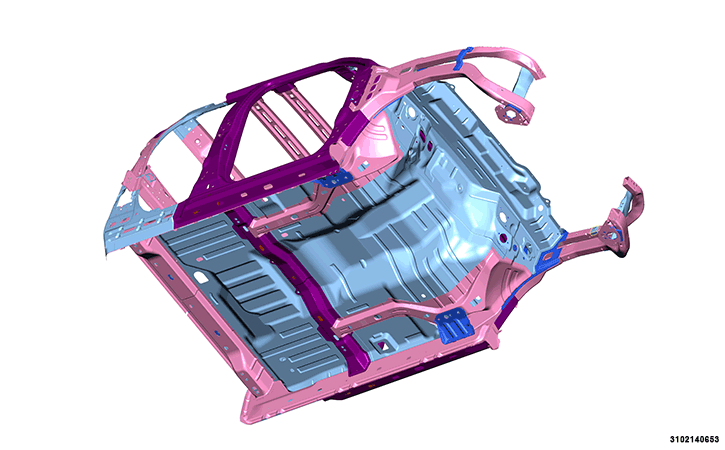 |
Quad Cab- Body In White (Bottom view rear)
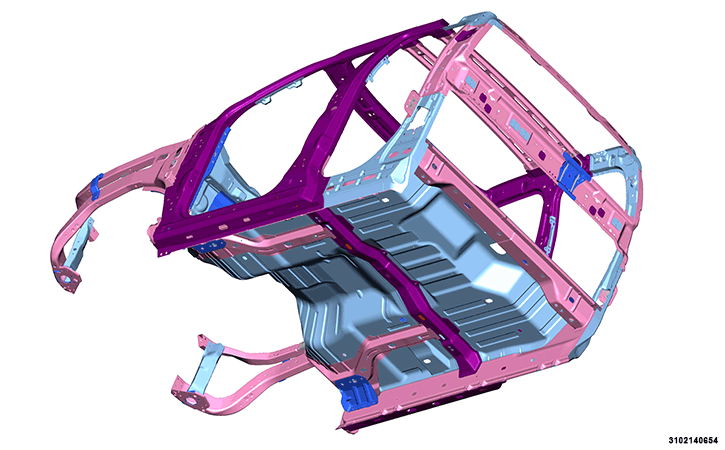 |
Quad Cab- Body In White (Left side view)
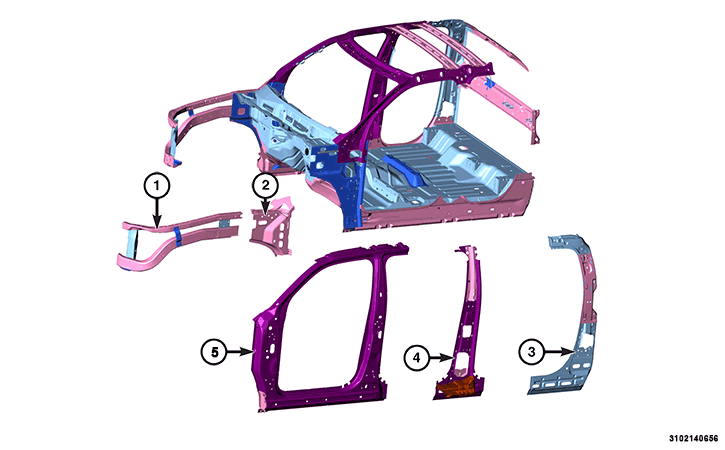 |
|||||
|
|||||
Quad Cab- Body In White (Right side view)
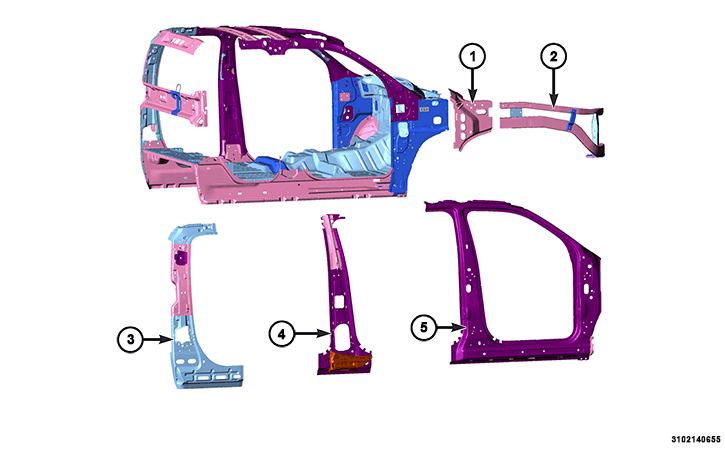 |
|||||
|
|||||
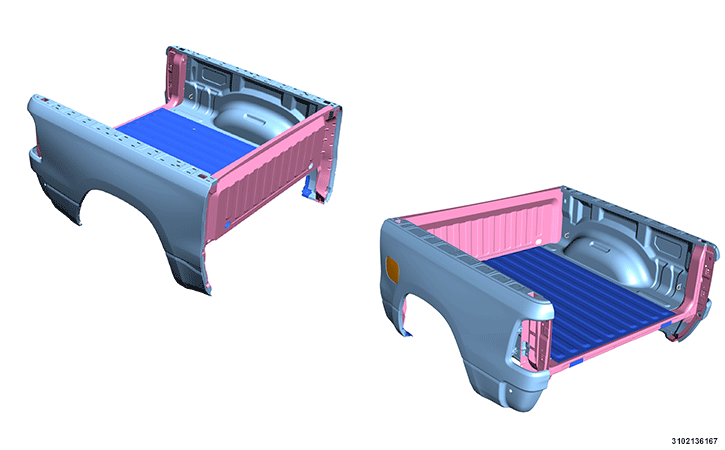
Pickup Box 5.7’ (Top views)
 |
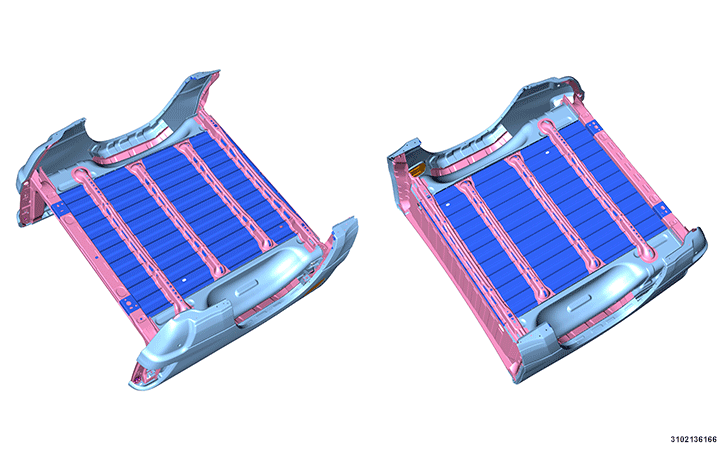
Pickup Box 5.7’ (Bottom views)
 |
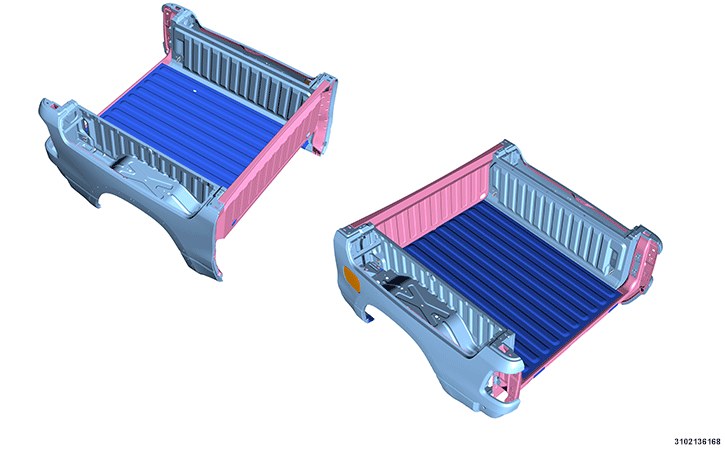
Pickup Box 5.7’ Ram Box (Top views)
 |
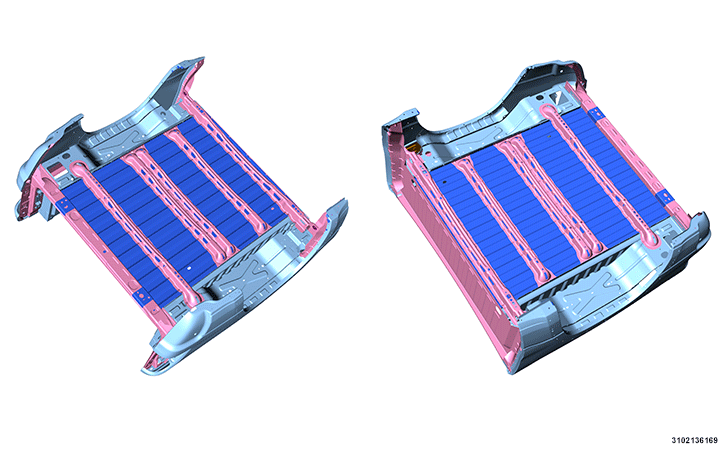
Pickup Box 5.7’ Ram Box (Bottom views)
 |
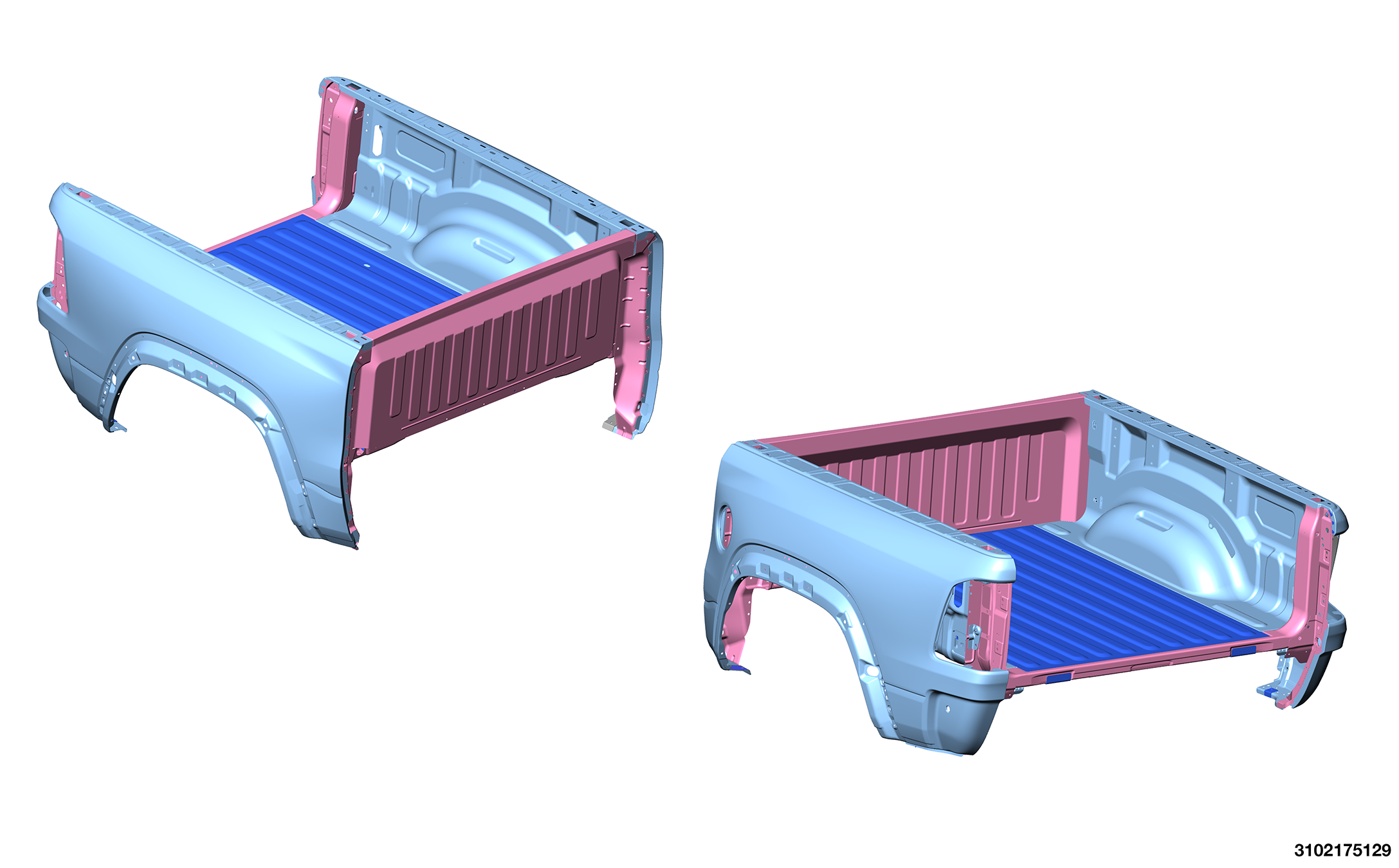
Pickup Box 5.7’ TRX Model (Top views)
 |
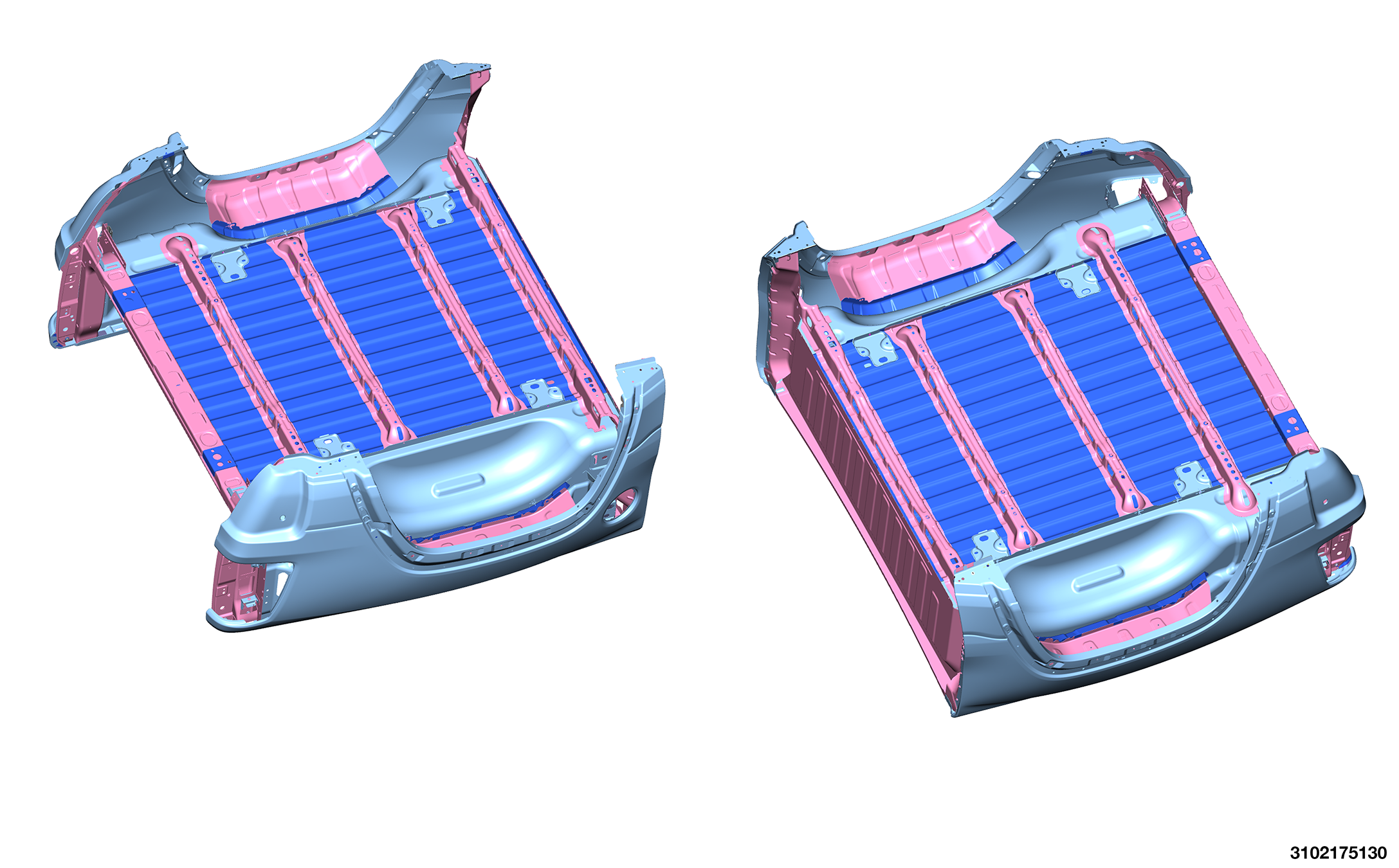
Pickup Box 5.7’ TRX Model (Bottom views)
 |
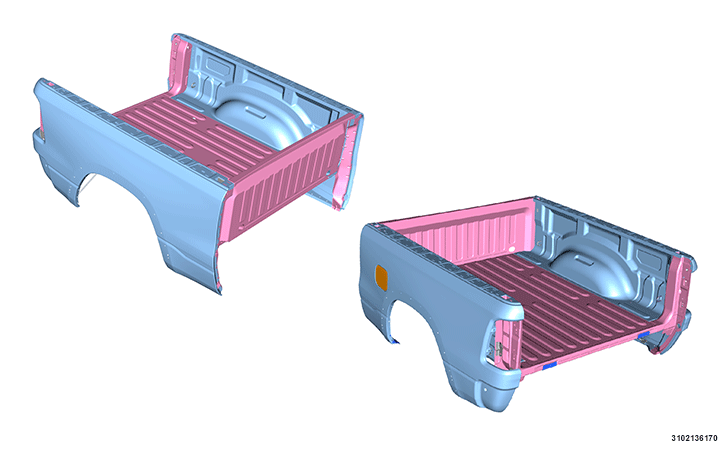
Pickup Box 6.4’ (Top views)
 |
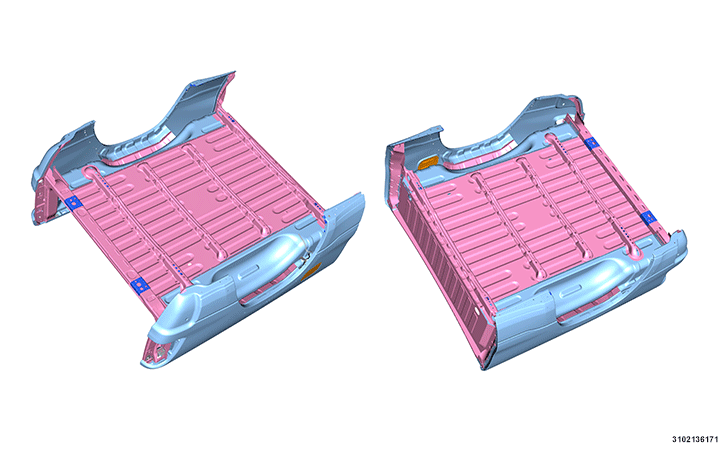
Pickup Box 6.4’ (Bottom views)
 |
Frame Crew Cab 5.7’ Box 144.5” Wheelbase (Top view front)
 |
Frame Crew Cab 5.7’ Box 144.5” Wheelbase (Bottom view rear)
 |
Frame Crew Cab 5.7’ Box 144.5” Wheelbase – TRX Model (Top view front)
 |
Frame Crew Cab 5.7’ Box 144.5” Wheelbase – TRX Model (Bottom view rear)
 |
Frame Crew Cab 6.4’ Box 153.4” Wheelbase (Top view front)
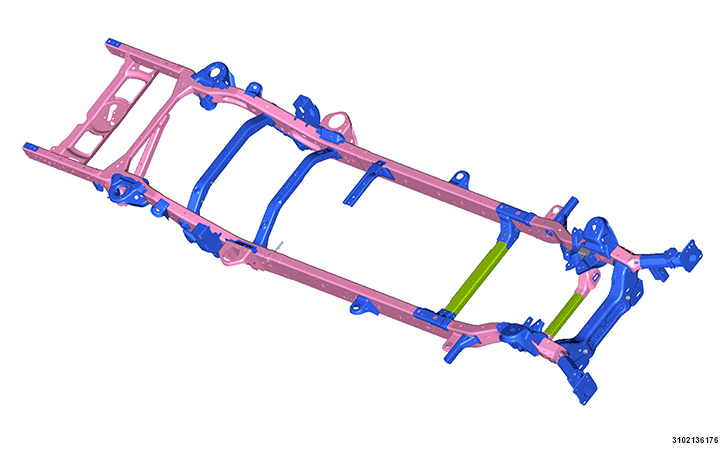 |
Frame Crew Cab 6.4’ Box 153.4” Wheelbase (Bottom view rear)
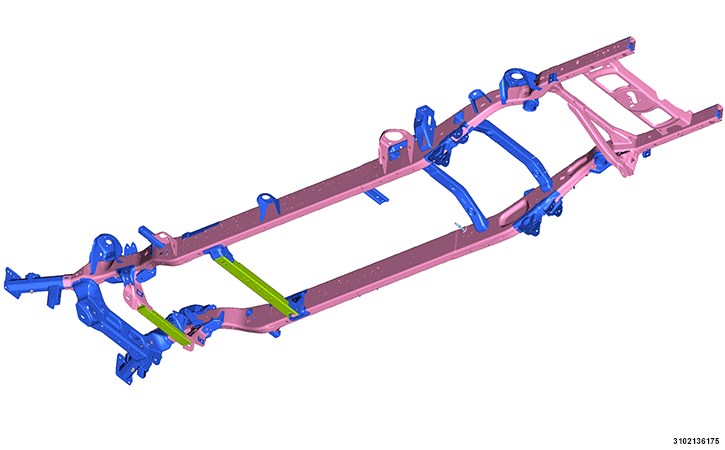 |
Frame Quad Cab 6.4’ Box 140.5” Wheelbase (Top view front)
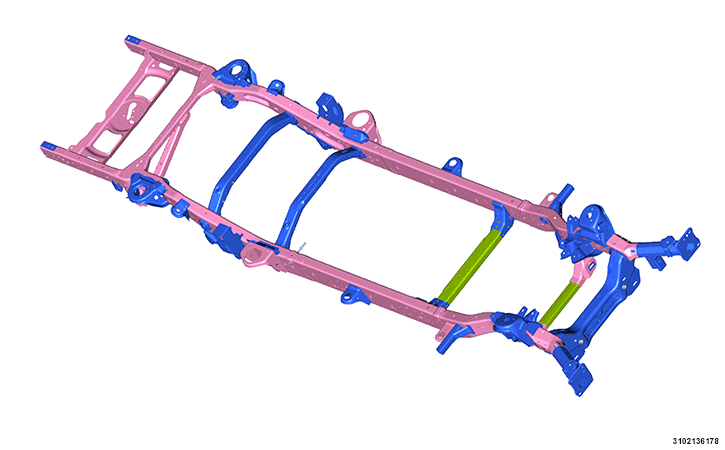 |
Frame Quad Cab 6.4’ Box 140.5” Wheelbase (Bottom view rear)
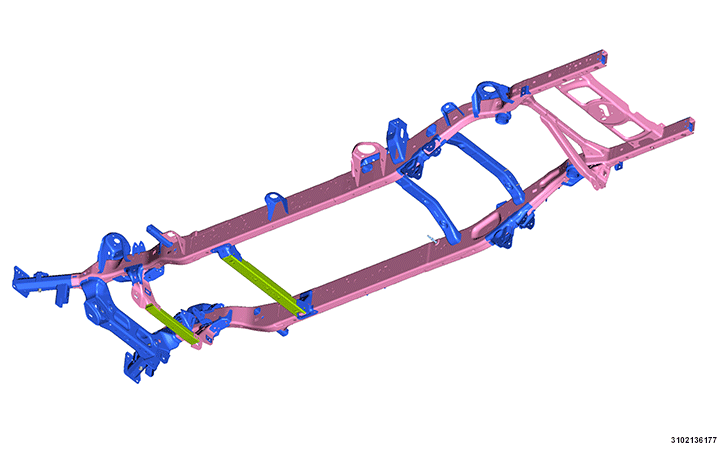 |